Volunteer work in Mexico san cristobal de las casas chiapas
A practical guide to volunteering in San Cristóbal de las Casas, Chiapas, Mexico, including programs, safety, costs, and tips.
Volunteering in San Cristóbal de las Casas, in the heart of Chiapas, can be a meaningful way to give back while experiencing a rich blend of Indigenous and mestizo culture, colonial architecture, and highland landscapes. This guide helps you navigate options, plan effectively, and approach your time in San Cristóbal with respect and curiosity. Whether your goal is to teach, support community projects, or contribute to environmental initiatives, you’ll find programs that fit different schedules, budgets, and skill sets.
Volunteer models in San Cristóbal de las Casas Chiapas
| Model | Typical duration | Typical cost to volunteer | Exchange of work for stay | Pros | Cons |
|---|---|---|---|---|---|
| Short-term program | 1–2 weeks | Low to moderate | Accommodation/ meals provided | Quick start; low commitment | Limited impact; may have hidden fees |
| Structured NGO placement | 4–12 weeks | Moderate | Housing sometimes provided | Clear supervision; training | May have application delays; fees apply |
| Community project with host families | 2–8 weeks | Moderate | Room and meals with family | Immersive experience; language practice | Cultural adjustments; variable oversight |
Compiled November 2026; check the provider's site for current details.
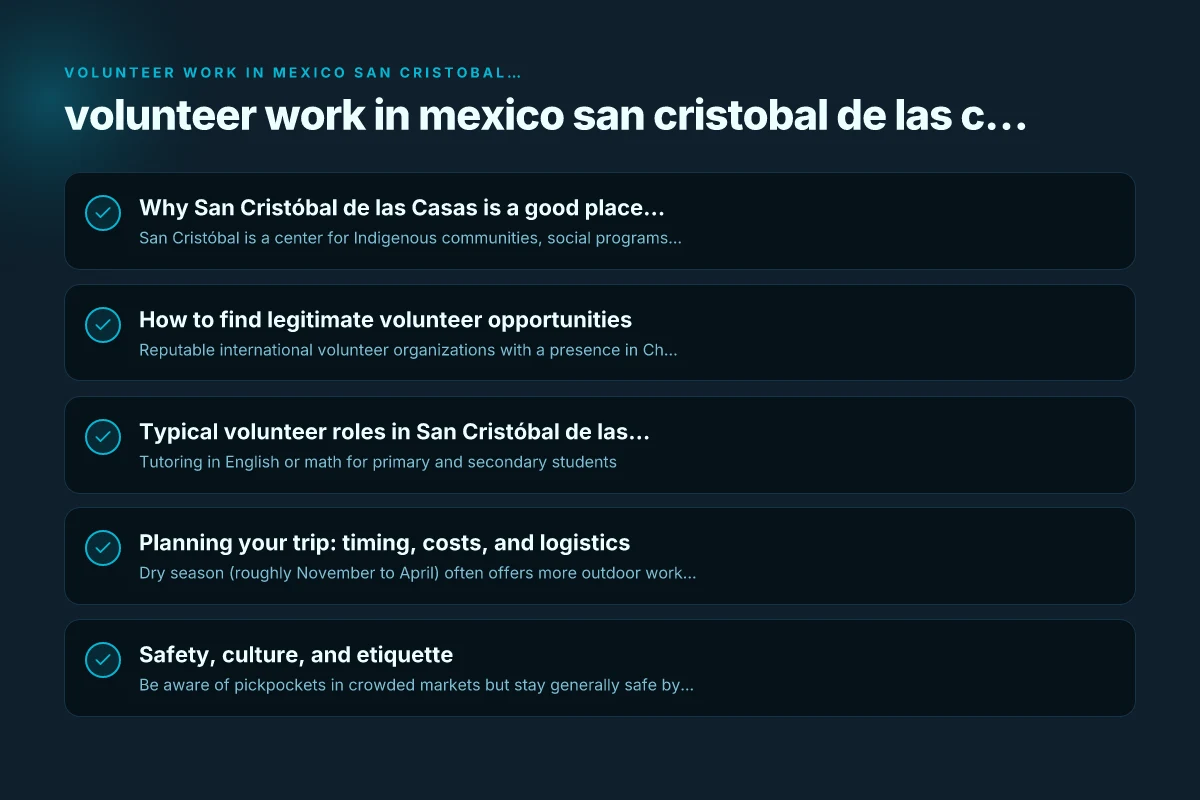
Why San Cristóbal de las Casas is a good place to volunteer
A hub for community-based projects
San Cristóbal is a center for Indigenous communities, social programs, and non-profits focused on education, health, and sustainable development. The city’s compact size makes it easier to get around, while nearby villages and rural areas provide opportunities to work beyond the tourist routes.
Cultural immersion with learning opportunities
The town is known for its markets, coffee culture, and proximity to Mayan communities. Volunteers can practice Spanish, learn about Zapotec, Tzotzil, and other Indigenous languages in informal settings, and gain a deeper understanding of regional histories.
A range of project types
From classrooms and youth centers to women’s cooperatives, ecological restoration, and community health advocacy, the volunteer field is broad. This variety allows you to align your time with your interests and skills.
How to find legitimate volunteer opportunities
Where to look
- Reputable international volunteer organizations with a presence in Chiapas
- Local NGOs with transparent missions and clear volunteer roles
- Universities or cultural centers that run community service or study-abroad programs
- Community centers and diocesan programs that host volunteers for short-term assignments
Red flags and due diligence
- Requests for large upfront fees without a clear breakdown
- Vague project descriptions or guaranteed “hands-off” activities
- Lack of home-stay or safety details
- Absence of a bilingual coordinator or local staff support
How to evaluate programs
- Length and schedule: short-term (2–4 weeks) vs. longer commitments
- Roles and responsibilities: are you qualified? Will you be trained?
- Language expectations: do you need Spanish or can you work in English?
- Living arrangements: homestays, dorms, or apartment options
- Safety and emergency procedures: medical support, local contacts, evacuation plans
Typical volunteer roles in San Cristóbal de las Casas Chiapas
Education and youth programs
- Tutoring in English or math for primary and secondary students
- After-school clubs focusing on arts, sports, or computer skills
- Classroom assistant roles for local teachers during schools’ busy periods
Community development and social services
- Administrative support for NGOs, helping with outreach, event coordination, or fundraising
- Workshops on health, hygiene, nutrition, or reproductive health
- Support for women’s groups, indigenous cooperative projects, or microfinance initiatives
Environmental and cultural preservation
- Community garden projects, reforestation efforts, or waste-reduction campaigns
- Documentation and archiving local traditional knowledge or community histories
- Conservation projects near surrounding forests and protected areas
Health outreach
- Assisting in clinics or mobile health units (where language and safety guidelines permit)
- Health education campaigns focusing on vaccination, sanitation, or maternal health
Cost considerations for volunteering in San Cristóbal de las Casas Chiapas Test8: What it Means and How to Use It
| Item | Typical range | What’s included | Payment status | Notes |
|---|---|---|---|---|
| Program/application fee | $0–$400 | Often includes orientation | Non-refundable | Check what it covers (training, materials) |
| Accommodation | $0–$300/week | Shared or private room | Varies by model | Some include meals; ask about utilities |
| Meals | $0–$150/week | Often optional or included | Non-inclusive | Local markets are budget-friendly |
| Transport to/from site | $0–$200 | Not always included | Individual expense | Consider regional bus/collectivo costs |
| In-country living costs | $100–$250/week | - | Personal | toiletries, SIM data, extras |
| Insurance | $20–$60/month | Optional | Often extra | Verify coverage abroad |
| Visa/permits | Varies by nationality | Not always included | Separate | Check Mexican immigration rules |
Compiled November 2026; check the provider's site for current details.
Planning your trip: timing, costs, and logistics
Best times to volunteer
- Dry season (roughly November to April) often offers more outdoor work and easier travel
- Peak festival periods can be busy. Coordinate with hosts to avoid overbooking
- Consider aligning with local school calendars if you want to work directly with students
Costs to expect
- Program fees: many organizations charge for placement, training, and housing
- Accommodation: homestays or shared apartments range from modest to moderate pricing
- Meals: some programs include meals. Others require you to cover food costs
- Transportation: local buses are affordable. International flights can be your biggest expense
- Insurance and visa: health insurance is essential. Check visa requirements for your nationality
How to arrange housing
- Homestay programs offer cultural exchange and language practice
- Shared apartments or volunteer houses are common for longer stays
- Some programs require you to book your own housing, while others pair you with a host family
Practical tips
- Learn basic Spanish before you go. Even simple phrases help
- Pack essentials: sturdy shoes, lightweight clothing, a rain jacket, and a small first-aid kit
- Bring adaptable teaching materials or activities if you’ll be in a classroom
- Have copies of important documents (passport, visas, insurance) and digital backups
Safety, culture, and etiquette
Safety considerations
- Be aware of pickpockets in crowded markets but stay generally safe by staying in well-trafficked areas
- Register with your country’s embassy or consulate if possible
- Keep local emergency numbers handy. Know how to reach your host organization
Cultural respect and language
- Dress modestly when visiting villages. Respect local customs and holy sites
- Engage with local leaders before initiating projects. Seek permission and guidance
- Practice humility and a learning stance. Avoid imposing your own approaches
- Use simple Spanish. Even basic phrases go a long way toward building trust
Working with communities
- Always ask before taking photos of people. Obtain consent
- Be mindful of gender roles and community decision-making processes
- Focus on sustainable, locally led solutions rather than “doing for” communities
A practical comparison: common volunteer models in San Cristóbal de las Casas Chiapas
| Model | Typical duration | Typical costs | Typical roles | Language needs | Pros | Cons |
|---|---|---|---|---|---|---|
| NGO partner program | 2–6+ weeks | Moderate to high | Education, health, admin support | Basic Spanish helpful | Structured, local staff support | Fees can be high; variable quality |
| Community-based project | 2–12 weeks | Low to moderate | Grassroots development, cultural projects | Beginner to intermediate Spanish | Direct impact, authentic experience | Less formal oversight; safety varies |
| Academic/Study abroad | 4–12 weeks | Moderate to high | Research, teaching assistantships | Moderate Spanish | Strong training, academic credit | Scheduling around coursework; limited availability |
| Short-term volunteer service fairs | 1–2 weeks | Low | Quick impact tasks; event-based | Basic Spanish | Flexible, inexpensive entry | Short time frame; limited integration |
Note: The table above offers a snapshot. Always verify current program details, inclusions, and support services with the organization.
Realistic expectations: impact, learning, and reciprocity
Volunteering in San Cristóbal de las Casas can be deeply rewarding, but success depends on setting realistic expectations. Many organizations work on incremental, long-term change rather than quick fixes. You may find that your most valuable contributions are in capacities you hadn’t anticipated, facilitating language exchange, sharing digital literacy skills, or helping with program administration. Likewise, you’ll gain more from immersion than you might expect: new perspectives, a broader worldview, and a network of local and international friends.
Typical volunteer roles and settings in San Cristóbal de las Casas Chiapas Test7: A Practical Guide to Understanding and Using test7 Effectively
| Role type | Setting | Hours/week | Supervision | Impact indication | Language requirement |
|---|---|---|---|---|---|
| Education/tutoring | Local schools, NGOs | 6–20 | Yes | Moderate | Basic Spanish helpful |
| Community health | Clinics, nonprofits | 8–20 | Yes | Local relevance | Spanish preferred |
| Arts, culture, youth programs | Community centers | 6–18 | Occasional | Indirect | English or Spanish ok |
| Conservation/environment | Urban or rural projects | 6–25 | Some | Medium | Spanish beneficial |
| Microenterprise support | Local cooperatives | 4–20 | Occasional | High | Spanish needed |
Compiled November 2026; check the provider's site for current details.
How to prepare a strong application and successful stay
Application basics
- Clarify your goals: what do you hope to learn, and what can you contribute?
- Demonstrate relevant skills: tutoring experience, fitness training, graphic design, medical knowledge, language teaching, or community outreach
- Provide a clear schedule and commitments: how many hours per week, for how long, and what you will do with time off
- Highlight adaptability and cultural sensitivity: describe experiences volunteering or living abroad
On arrival and during your stay
- Meet your local contact or coordinator within the first day
- Establish a routine: language practice, working hours, and time for rest
- Maintain open communication with your host organization about challenges or changes
- Document your experiences respectfully for your own records or a possible report back to donors
Final recommendation
If you’re drawn to volunteer work in Mexico, San Cristóbal de las Casas offers a compelling mix of opportunity, culture, and impact. Start by researching reputable organizations with transparent practices, clear roles, and strong local staff. Align your time with a project that matches your skills and interests, and plan for a meaningful, culturally respectful stay. Approach your volunteer experience as a learning journey as much as a contribution to communities, and you’ll maximize both your personal growth and the positive outcomes for the people you serve.