San Cristobal: A Comprehensive Guide to the Iconic Canary Island Heritage and Travel

Discover San Cristobal's culture, nature, and travel essentials for an unforgettable visit.
San Cristobal is a cornerstone of the Galápagos Islands and often serves as the first taste of this remarkable archipelago for travelers arriving by air or sea. It’s famous for its proximity to sea lions. Turquoise seas, and volcanic landscapes, San Cristobal also offers a deep dive into local culture, history, and sustainable tourism. This guide covers what to see, how to plan your trip, and how to enjoy the island responsibly, whether you’re here for wildlife watching, hiking, or simply soaking up the laid-back island vibe.
Getting to San Cristobal — transport options and key details
| Option | Carrier / Route | Typical duration | Cost (approx) | Pros | Cons |
|---|---|---|---|---|---|
| Flight | International to Baltra + transfer or direct to San Cristóbal | 2–5 hours from main hubs | Moderate to high | Fast; frequent from mainland | Transfer needed if coming via Baltra |
| Cruise transfer | Pre-arranged Galápagos cruise | Same-day transfer | Included in trip price | Seamless logistics | Limited seats; schedules vary |
| Domestic flight | Mainland Ecuador to San Cristóbal | 1–2 hours | Moderate | Quick arrival | Limited seats; weather dependent |
| Barge/boat | Coastal routes (rare) | Several hours | Low to moderate | Scenic | Not common; weather sensitive |
| Ferry | From neighboring islands (rare) | 2–4 hours | Low | Inexpensive | Not direct; infrequent |
Compiled November 2026; check the provider's site for current details.
Getting to San Cristobal
Where and how to fly
- The main gateway to the Galápagos from Ecuador is San Cristobal Airport (SCY), a short flight from Guayaquil or Quito.
- Domestic flights are provided by several Ecuadorian carriers. Schedules vary with the season.
- For some travelers, a liveaboard or a longer cruise itinerary may include San Cristobal as a port of call.
Inside the island
- Taxis are the most convenient transport for travelers. Bike rentals are common in the town center.
- If you’re visiting during peak season, book accommodations and tours earlier to secure availability and better rates.
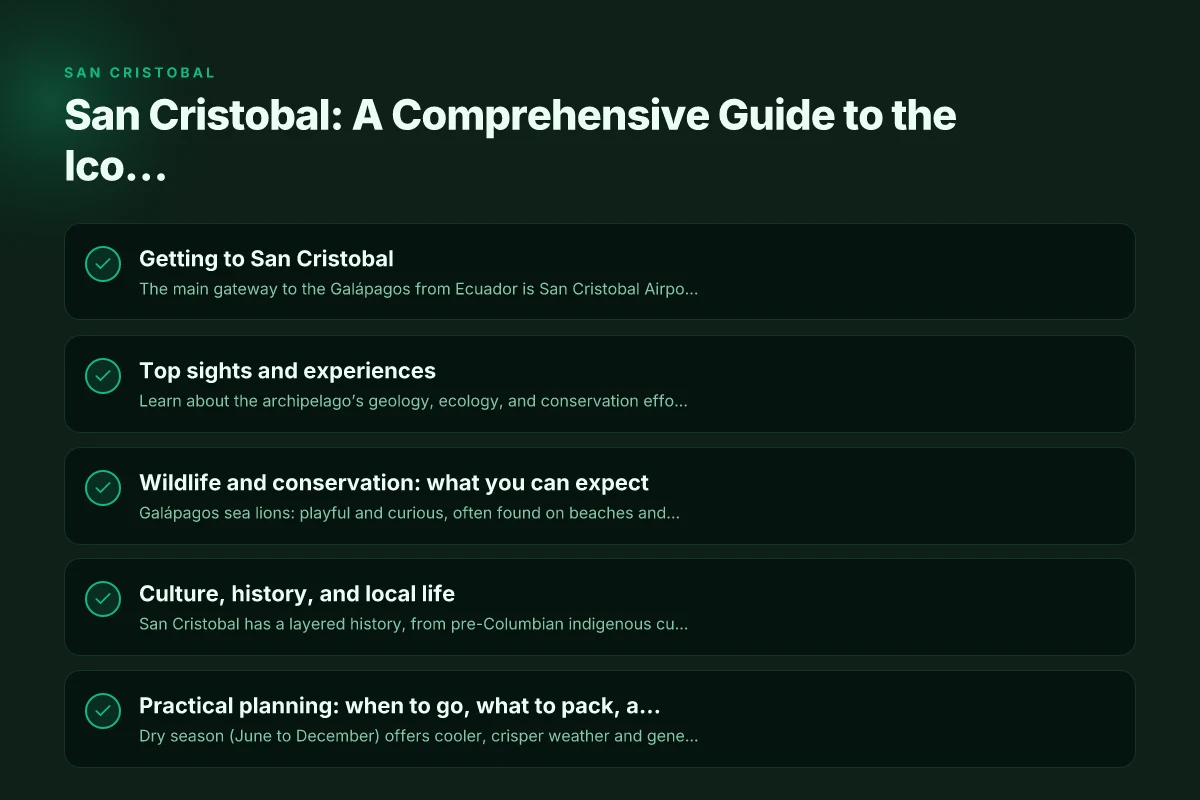
Top sights and experiences
Parque Nacional and Interpretation Center
- Learn about the archipelago’s geology, ecology, and conservation efforts.
- The center provides context for ongoing scientific research and the islands’ unique flora and fauna.
Puerto Baquerizo Moreno
- The capital of the Galápagos Province offers a charming waterfront, eateries with fresh seafood, and a relaxed pace.
- Watch sea lions lounging on benches, and observe the rhythm of daily life on a small island scale.
La Galapaguera de Cerro Colorado
- A key penguin and tortoise habitat that offers close encounters with Galápagos wildlife in an accessible setting.
- Guided tours help you spot endemic species and understand their adaptation to island life.
Playa Mann and nearby beaches
- Calm shores ideal for a family-friendly day. Morning visits often yield quieter wildlife encounters.
- Snorkeling opportunities abound, particularly around rocky outcrops where marine life thrives.
Wildlife and conservation: what you can expect
Iconic species you may encounter
- Galápagos sea lions: playful and curious, often found on beaches and boardwalks.
- Blue-footed boobies, masked boobies, and frigatebirds: perched on rocks or gliding over the coast.
- Galápagos tortoises and land iguanas: in designated reserves and habitats designed to minimize human impact.
How to observe responsibly
- Keep a respectful distance from wildlife. Do not chase or touch animals.
- Stay on marked paths and respect vegetation to protect delicate ecosystems.
- Follow park rules, use licensed guides, and dispose of trash properly.
Guided tours and learning
- Local naturalist guides provide insights into geology, evolution, and current conservation challenges.
- Some tours combine snorkeling with wildlife watching, enriching the experience while prioritizing safety and conservation.
Top sights and experiences — must-see options and access
| Sight / Experience | Location on island | Access level | Best season | Time to allocate | Entry / permit |
|---|---|---|---|---|---|
| Sandy Beach (Carola/Bluff) | Western coast | Easy access | Year-round | 1–2 hours | Free |
| Interpretation Center | Puerto Baquerizo Moreno | Easy | Year-round | 1–2 hours | Free |
| Puerto Chino Beach | South coast | Easy to moderate | Dry season | 2–3 hours | Paid permit not required |
| Kicker Rock snorkeling | Off coast | Moderate to challenging | Dry season peak | Half-day | Tour required |
| El Junco Lagoon | Central highlands | Easy | All year | 1 hour | Free |
| Galapagos crabs and wildlife walk | Various trails | Easy | All year | 1–3 hours | Free |
Compiled November 2026; check the provider's site for current details.
Culture, history, and local life
Indigenous and colonial influences
- San Cristobal has a layered history, from pre-Columbian indigenous cultures to colonial-era influences.
- Museums and cultural centers provide context about human interaction with the islands and conservation efforts.
Food and markets
- Fresh seafood dominates the menu, with ceviche and grilled fish common choices.
- Local markets offer handicrafts, souvenirs, and a chance to mingle with residents and learn about daily island life.
Arts and community events
- Small galleries and cultural events reflect the creative side of island communities.
- Participation in community-led activities can deepen your understanding of life on the Galápagos.
Practical planning: when to go, what to pack, and how to move
Best times to visit
- Dry season (June to December) offers cooler, crisper weather and generally calmer seas, ideal for wildlife viewing and hiking.
- Wet season (January to May) brings lush landscapes, occasional showers, and vibrant birdlife. Sea conditions can vary.
- Shoulder months often present a balance of pleasant weather and fewer crowds.
Packing essentials
- Lightweight, breathable clothing and a light rain shell.
- Sunscreen, a wide-brimmed hat, sunglasses, and reef-safe protection.
- Reusable water bottle, modest swimwear, and water-friendly footwear for rocky shorelines.
- Binoculars and a camera with a good zoom help capture wildlife without disturbing them.
Getting around on the islands
- Taxis and private transfers are common in San Cristobal town.
- If you plan to visit multiple sites, consider booking a guided day tour that includes transportation and entry fees.
- For longer explorations, renting a bicycle or scooter can be an enjoyable way to explore at your own pace.
A quick comparison: San Cristobal vs. other Galápagos highlights
| Aspect | San Cristobal | Santa Cruz | Isabela | Fernandina | Española |
|---|---|---|---|---|---|
| Primary appeal | Wildlife close to town, easy access, cultural vibe | Charles Darwin Research Station, dense wildlife | Vast lava fields, large sea turtle populations | Pristine edges, social sea lions, rugged coastlines | High-end wildlife viewing, unique landscapes |
| Best for | First-time visitors, easy logistics | Families and wildlife lovers | Adventurers seeking volcanic landscapes | Remote wildlife settings | Birders and photographers |
| Typical pace | Relaxed, easy to navigate | Moderate activity, more infrastructure | Active, some remote areas | Remote and rugged | Serene, intimate encounters |
| Typical crowds | Moderate, traveler-friendly | Higher seasonality | Moderate to busy during peak times | Quieter, less crowded | Moderate, seasonal peaks |
Practical tips for a responsible visit
- Book with licensed operators who follow sustainable practices and respect park rules.
- Respect wildlife distances: many animals are sensitive to human presence. Maintain calm behavior.
- Respect breeding colonies and restricted zones to avoid disturbing nests and pups.
- Support local communities by shopping at locally owned stores and eating at family-run eateries.
- Consider a dedicated conservation donation or volunteering with reputable programs if available.
What to expect on a typical day in San Cristobal
- Morning: A sunrise walk along a quiet beach or a guided snorkeling session before the wind picks up.
- Late morning: Visit the Interpretation Center or a local museum to learn about island geology and conservation.
- Afternoon: Lunch at a seaside cafe, followed by a stroll through Puerto Baquerizo Moreno’s shops and waterfront.
- Late afternoon: A gentle hike to scenic viewpoints, or a boat tour offered by a licensed operator.
- Evening: Fresh seafood dinner, perhaps followed by stargazing on a clear night.
Where to stay and how to choose
- Options range from simple guesthouses to mid-range hotels with ocean views.
- Proximity to the harbor can minimize transit time for tours, while some travelers prefer quiet inland pockets.
- Check for properties that emphasize eco-friendly practices, such as composting, reef-safe products, and community involvement.
Wildlife and conservation — what you can expect and how to behave
| Topic | Expected wildlife | Safe viewing tips | Conservation guidelines | Fees / permits | Training needed (experience) |
|---|---|---|---|---|---|
| Galápagos finches | Multiple small colorful species | Maintain distance | Do not touch or feed | Included in park fees | Beginner-friendly |
| Sea lions | Gentle to curious; pups common | Respect space; back away | Do not block paths | Free | Suitable for all |
| Blue-footed boobies | Coastal nesting sites | Use binoculars; quiet | Do not disturb nests | Free | All levels |
| Tortoises (on-island reserves) | Land tortoises | Stay on trails | Follow ranger rules | Local reserve fee | Beginner-friendly |
| Marine iguanas | Rocky shores | Do not block basking | No flash photos | Free | All levels |
Compiled November 2026; check the provider's site for current details. Mision y vision: aligning purpose and strategy in organizations
Final recommendation
If you’re visiting the Galápagos for the first time, San Cristobal offers an excellent balance of wildlife, culture, and accessibility. Start with the island’s iconic harbor town energy, add a guided wildlife encounter with responsible operators, and couple it with a visit to conservation-focused centers to gain a deeper understanding of the archipelago’s ecological significance. The island rewards travelers who move thoughtfully, respect the living landscape, and engage with local communities. Plan ahead, stay flexible, and let San Cristobal reveal its character step by step.