Spanish immersion excursions: immersive ways to learn and explore
Discover the best Spanish immersion excursions to boost language skills while exploring vibrant cultures.
Spanish immersion excursions offer a proven path to learning a language while you travel. By designing time for daily conversation, hands-on activities, and guided cultural exploration, these trips help you internalize vocabulary, pronunciation, and grammar more quickly than classroom study alone. Whether you’re a beginner seeking confidence or an intermediate learner aiming to polish fluency, immersion excursions can tailor experiences to your level and interests. Below is a practical guide to choosing, planning, and benefiting from these journeys.
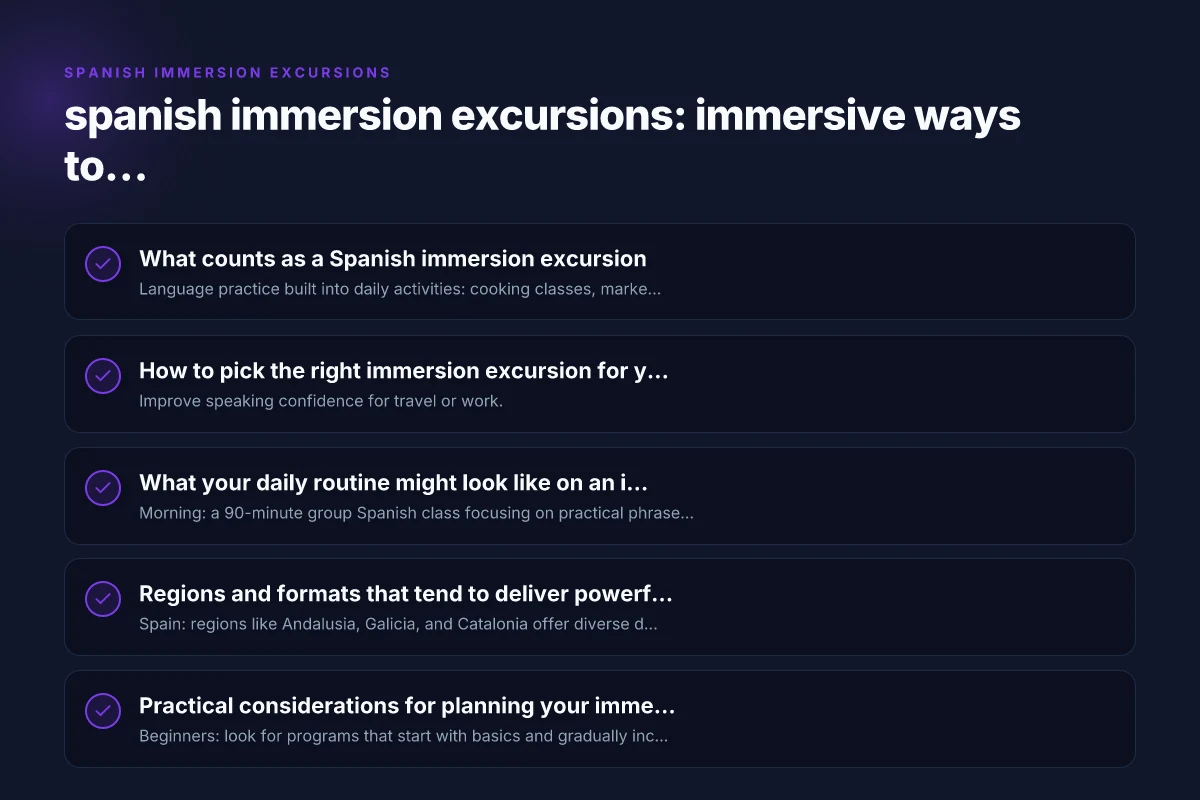
What counts as a Spanish immersion excursion
Defining characteristics
- Language practice built into daily activities: cooking classes, market tours, co-working with locals, or homestays.
- Real-time feedback from native speakers and instructors.
- Cultural experiences that require using Spanish to navigate, negotiate, and communicate.
- Structured yet flexible schedules that balance study blocks with exploration.
Common formats
- Community-based stays: living with a host family or in a small resident community.
- Volunteer programs: contributing to local projects while practicing Spanish.
- Studio or language school intensives paired with weekend excursions.
- Themed trips: culinary, music, dance, or history-focused experiences.
How to pick the right immersion excursion for you
Set your goals
- Improve speaking confidence for travel or work.
- Build vocabulary around topics you love (food, sports, art, business).
- Achieve a certain CEFR level through structured practice.
- Learn regional varieties of Spanish (Castilian, Latin American dialects).
Assess practical details
- Duration: from a long weekend to several weeks.
- Host culture and region: Spain, Mexico, Colombia, Argentina, and beyond offer distinct flavors.
- Accommodation style: homestay, shared apartments, or hotel-based programs.
- Class structure: daily conversation, grammar workshops, or workshops integrated into activities.
- Support: availability of coordinators, emergency assistance, and language partners.
Compare exercise formats
Use this quick guide to match formats to your learning preferences.
| Format | Pros | Cons |
|---|---|---|
| Homestay with family | Immersive daily use of Spanish; deep cultural exchange | Less control over pace; varying family dynamics |
| Language school with activities | Structured lessons; reliable scheduling | May feel staged if activities aren’t well integrated |
| Volunteer/community project | Real-world practice; purpose-driven conversations | Depending on project, time commitments can be rigid |
| Themed cultural tour | Engaging topics; vocabulary tied to interests | May have long travel days; less formal language instruction |
What your daily routine might look like on an immersion excursion
A sample day
- Morning: a 90-minute group Spanish class focusing on practical phrases for the day’s activities.
- Mid-morning: market visit or cooking demonstration with guided questions in Spanish.
- Lunch: shared meals with locals or host family, encouraging spontaneous conversation.
- Afternoon: hands-on activity (dance class, artisan workshop, or volunteer project) with language prompts.
- Evening: conversation circle or language exchange, followed by reflection notes.
How to maximize learning
- Prepare vocabulary in advance for the day’s activities.
- Ask for corrections and model speaking back to native speakers.
- Record short audio notes to monitor pronunciation and fluency progress.
- Reflect in a journal with new phrases and cultural insights.
Regions and formats that tend to deliver powerful immersion
Spain and Latin America options
- Spain: regions like Andalusia, Galicia, and Catalonia offer diverse dialects and cultural contexts.
- Mexico: cities like Oaxaca and Guanajuato blend traditional crafts with modern conversation practice.
- Colombia: vibrant cities like Medellín provide friendly environments for beginners and intermediate learners.
- Argentina: Buenos Aires experiences combine tango, literature, and colloquial speech.
How regional variety shapes learning
- Vocabulary and idioms vary by country and even city.
- Pronunciation patterns differ (z/c in Spain vs. Latin America, or distinctive yeísmo in some regions).
- Cultural references influence conversational topics and social cues.
Practical considerations for planning your immersion trip
Language level and pacing
- Beginners: look for programs that start with basics and gradually increase complexity.
- Intermediate/advanced: seek programs with conversation-heavy tracks and niche vocab relevant to hobbies or work.
Logistics that impact your experience
- Visa requirements, health insurance, and travel advisories.
- Accommodation accessibility and daily commute times to classes.
- Availability of language partners or tutoring outside class hours.
Safety and cultural respect
- Learn basic etiquette in the host country (greetings, table manners, and conversation norms).
- Understand local safety guidelines and pick programs with strong on-site support.
- Practice empathy: ask questions to learn rather than assuming, especially about culture and identity.
A quick comparison of common immersion formats
- Homestay with family: ideal for total linguistic immersion. Best for cultural depth. Slower pace for beginners.
- Language school plus activities: balanced mix of structured learning and exploration. Predictable schedule.
- Volunteer projects: purpose-driven learning. Real-world language use. May require flexibility.
- Guided cultural tours: high engagement with context. Great for vocabulary around themes. Less formal language instruction.
Table: a quick format comparison (key differences at a glance)
| Format | Language intensity | Schedule flexibility | Cultural depth | Best for |
|---|---|---|---|---|
| Homestay | High | Moderate | Very high | Beginners who want total immersion |
| Language school + activities | Medium-High | Moderate | Moderate | General fluency goals with structure |
| Volunteer projects | Medium | Low-Medium | High | Learners who want real-world practice and purpose |
| Guided cultural tours | Medium | High | High | Explorers who prioritize culture and topics |
How to measure progress during and after the trip
On-trip indicators
- Number of new phrases learned and actively used in daily conversations.
- Comfort level with ordering food, asking for directions, or handling misunderstandings.
- Ability to participate in group discussions without heavy translation.
Post-trip follow-up
- Set a 30-, 60-, and 90-day language goal plan with achievable milestones.
- Schedule regular practice with language partners or tutors.
- Review and reuse vocabulary from trip in real-life contexts (work, travel, or hobbies).
The recommendation: how to choose your ideal Spanish immersion excursion
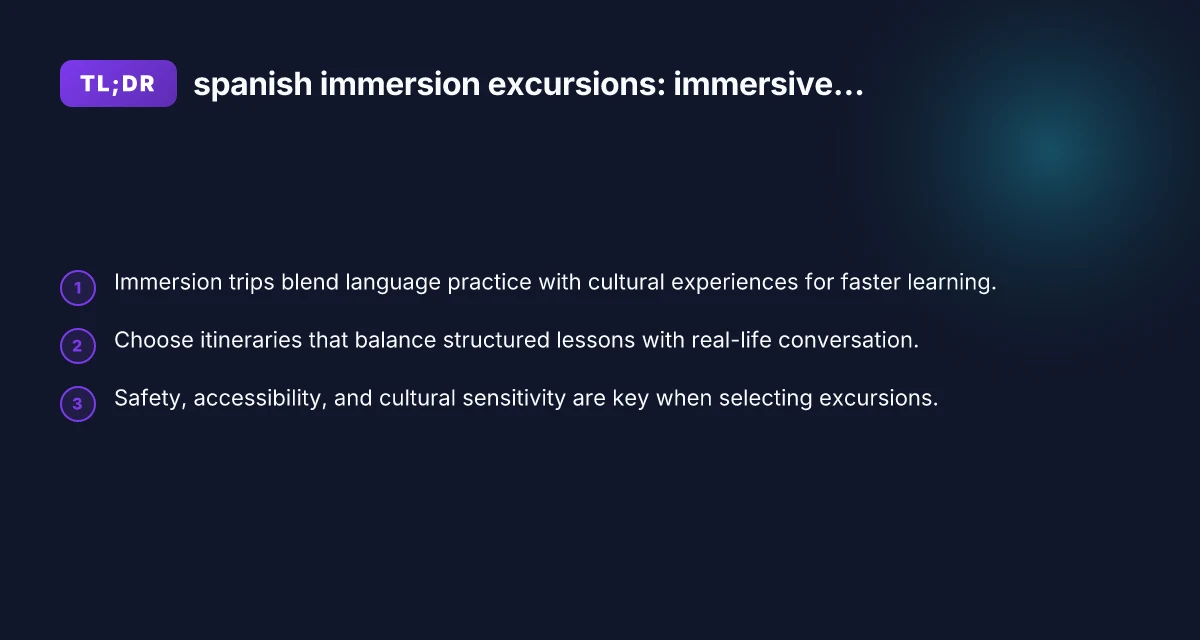
If you want a rich blend of language practice, culture, and memory-making experiences, start with a program that pairs structured language work with immersive daily activities, preferably with a homestay or community-based component. Prioritize trips that:
- Align with your current level and target outcomes (speaking confidence, specific vocabulary, or regional dialects).
- Offer a balanced schedule that includes both guided instruction and plenty of real-life conversation.
- Provide strong on-site support, safety protocols, and culturally respectful experiences.
- Include opportunities to reflect and reinforce learning after the trip, such as follow-up tutoring or language exchange commitments.
For first-timers, a two-week Spain or Latin American country immersion with a host family can deliver the feel of a longer journey without overwhelming you. For more seasoned learners, look for programs offering intensive conversation tracks, regional dialect exposure, and community projects that require negotiation and collaboration in Spanish. Spanish immersion christmas course Mexico sancristobal delascasas chiapas
Bottom line: Spanish immersion excursions are among the fastest ways to elevate your language skills while you explore new places. By choosing formats that emphasize daily practice, real conversations, and cultural context, you can turn travel into a powerful classroom. Ready to start? Identify your goals, pick a region that excites you, and find a program that balances instruction with authentic, on-the-ground experiences.