Newsletter: how to start, grow, and optimize a compelling newsletter
A practical guide to starting, growing, and optimizing a successful newsletter.
Starting a newsletter can feel like a big leap, but with a clear focus and steady execution, it becomes a powerful channel for connection, trust, and even revenue. This guide walks you through the essentials: choosing a niche, crafting compelling content, growing your list, and optimizing for long-term success.
Niche options and audience fit
| Niche / Audience | Size | Competition | Pain point clarity | Potential monetization | Ideal tone |
|---|---|---|---|---|---|
| Personal finance for beginners | Large | Medium | Clear | High | Friendly |
| B2B marketing for startups | Medium | High | Clear | High | Professional |
| Creator economy and newsletters | Medium | Medium | Clear | Medium | Conversational |
| Wellness for remote workers | Medium | Low | Clear | Medium | Supportive |
| Tech product deeper-dive literacy | Small | Low | Clear | Medium | Analytical |
Compiled November 2026; check the provider's site for current details.
1) Define your niche and audience
A strong newsletter begins with clarity. You’ll stand out by offering something specific that a real group of people cares about.
Why niche matters
- Reduces competition and decision fatigue for readers.
- Helps you position expertise and voice.
- Improves engagement because content feels highly relevant.
How to identify your audience
- List real-world readers you want to help.
- Define their goals, pain points, and questions.
- Consider what you can uniquely provide (insights, templates, curation, commentary).
Practical steps
- Create an audience persona: demographics, interests, challenges.
- Validate with a pre-signup survey or a few seed subscribers.
- Write an editorial mission statement (1–2 sentences).
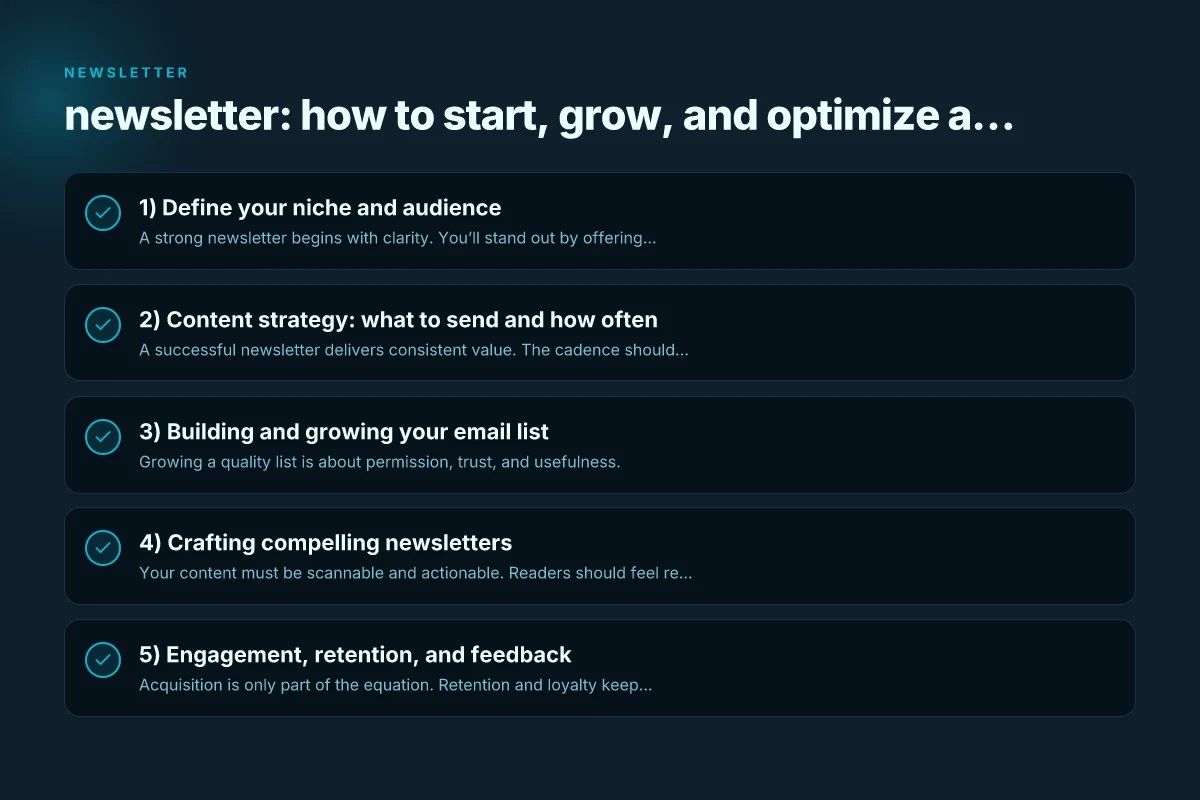
2) Content strategy: what to send and how often
A successful newsletter delivers consistent value. The cadence should fit your capability, not just what others advise.
Content types to mix
- Educational tutorials or how-tos.
- Curated resources and tools with quick commentary.
- Thoughtful analysis or commentary on industry news.
- Templates, checklists, or workbook-style content.
- Community or reader-generated highlights.
Cadence considerations
- Start modestly: weekly or biweekly often feels sustainable.
- Be consistent more than perfect. If you miss a week, communicate briefly.
- Batch content when possible to reduce ongoing workload.
The composition routine
- Hook: a bold or intriguing line to draw readers in.
- Value: at least one practical takeaway or insight.
- Action: a clear next step or resource.
- Voice: maintain a consistent tone that reflects your brand.
Content strategy frequency and formats
| Format / Frequency | Weekly recap | In-depth issue | Quick tips | Case study | Community Q&A | Guest contribution |
|---|---|---|---|---|---|---|
| Newsletter issue | Yes | Yes | Yes | No | No | Yes |
| Blog post cross-post | No | Yes | No | Yes | No | No |
| Digest email | Yes | No | Yes | No | Yes | No |
| Social teaser | Yes | Yes | Yes | No | No | No |
| Video/audio companion | No | No | No | Yes | No | Yes |
Compiled November 2026; check the provider's site for current details. Medical spanish course Mexico san cristobal chiapas
3) Building and growing your email list
Growing a quality list is about permission, trust, and usefulness.
Lead magnets and signup incentives
- Checklists, templates, or cheat sheets relevant to your niche.
- A mini email course that delivers value over a few days.
- Access to exclusive community or early access to content.
Growth channels
- Website signup forms with clear value propositions.
- Social media shoutouts and cross-promotions with peers.
- Guest posts on relevant publications or blogs.
- Webinars, Q&A sessions, or live streams that require signup.
Best practices for list growth
- Use double opt-in to ensure engaged subscribers.
- Be transparent about frequency and content.
- Segment when possible (interests, activity) to tailor content.
4) Crafting compelling newsletters
Your content must be scannable and actionable. Readers should feel rewarded for the time they invest.
Structure guidelines
- Short opening that reinforces value and sets expectations.
- 3–5 digestible sections or bullets per issue.
- A clear call to action (CTA) in every issue.
Writing tips
- Lead with outcomes: what readers will gain.
- Use concrete examples, case studies, or data whenever possible.
- Break up text with subheads, bullet lists, and visuals.
Design and formatting
- Clean, readable typography. Plenty of white space.
- Responsive templates for mobile devices.
- Lightweight visuals: diagrams, screenshots, or simple icons.
Growth levers and feasibility
| Lever | Set-up effort | Ongoing effort | Impact | Risks | Notes |
|---|---|---|---|---|---|
| Lead magnets | Medium | Low | High | Low risk | E-books, templates |
| Referral program | Medium | Medium | Medium | Medium | Rewards help share |
| Welcome onboarding | Low | Low | High | Low | Series of emails |
| Segmentation | Medium | Medium | High | Medium | By topic, persona |
| Paid acquisition | High | Low | Medium | High | Narrow targeting |
Compiled November 2026; check the provider's site for current details. Maya language courses san cristobal chiapas
5) Engagement, retention, and feedback
Acquisition is only part of the equation. Retention and loyalty keep your newsletter thriving.
Signals of engagement
- Open rates, click-through rates, and time spent per issue.
- Replies from readers and number of conversations sparked.
- Growth in paid or premium tiers (if offered).
Feedback loops
- Include a short poll or question in issues to learn what readers want.
- Encourage replies and actively respond to reader messages.
- Periodically review analytics and adjust content mix.
Retention tactics
- Consistent cadence and predictable value.
- Seasonal or series issues that reward subscribers with deeper dives.
- Community features: reader spotlights, Q&A columns, or member-only content.
6) Monetization and sustainability (optional)
Many newsletters start as a passion project and evolve into a revenue channel.
Monetization options
- Sponsorships or advertiser placements aligned with audience interests.
- Premium or paid tiers offering exclusive content or products.
- Affiliate partnerships for tools and resources you genuinely recommend.
- Productized offerings: templates, courses, or consulting.
Considerations for monetization
- Preserve trust: maintain transparency about sponsorships and affiliate relationships.
- Don’t over-monetize: balance revenue with ongoing value.
- Test pricing and packages carefully. Start with a soft launch or pilot.
7) A practical content calendar and workflow
A realistic workflow keeps momentum without burning out.
Sample quarterly plan
- Month 1: foundational content (core topics, staple resources) and a welcome sequence for new subscribers.
- Month 2: deep dives and case studies. Guest contributions.
- Month 3: series-based issues (e.g., “X steps to Y”) and community features.
Weekly/drequent tasks
- Monday: plan and outline issue(s).
- Tuesday: draft and edit.
- Wednesday: visuals, formatting, and internal review.
- Thursday: publish and promote.
- Friday: engage with replies and gather feedback.
Tools to consider
- Email service providers with automation and templates.
- Analytics dashboards for open rates, clicks, and conversions.
- Content planning tools or spreadsheets to track topics and deadlines.
Table: A simple comparison of common newsletter focuses Map of san cristobal delascasas
| Focus | Pros | Cons | Ideal for |
|---|---|---|---|
| Curated resources | Least writing effort; high utility | Needs ongoing vetting | Busy professionals needing efficiency |
| Original tutorials | Strong value; builds authority | Time-intensive | Learners seeking practical skills |
| Commentary and insights | Builds voice; differentiates | Requires niche depth | Thought leaders and analysts |
| Community-driven | High engagement; loyal readers | Moderation needed | Collaborative audiences |
8) Measuring success: what to track and why
Data informs improvement. Start with a few core metrics and expand as you grow.
Key metrics to watch
- Open rate: signals subject line and audience interest.
- Click-through rate: shows engagement with content and CTAs.
- Conversion rate: how many take a desired action (download, signup, purchase).
- List growth rate: momentum of your audience expansion.
- Unsubscribe rate: potential issues with value or frequency.
How to use metrics
- Set quarterly targets for each metric.
- Identify top-performing topics and replicate their structure.
- A/B test subject lines, CTAs, and content formats.
Final section: recommendation Learn spanish Mexico san cristobal de las casas one on one courses
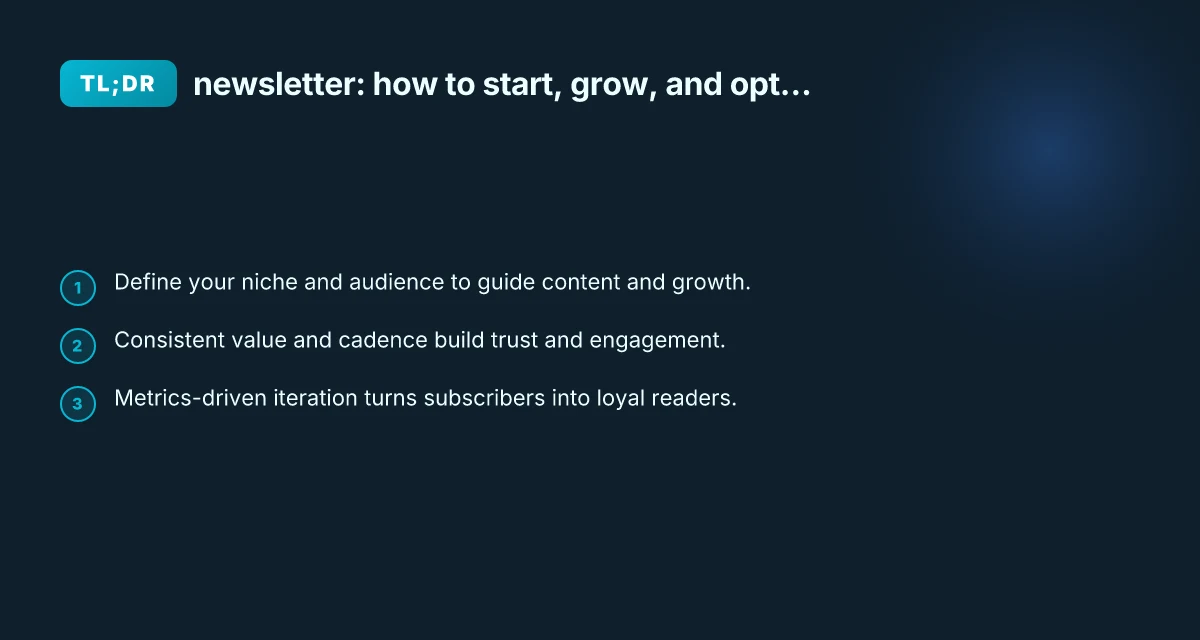
If you’re starting a newsletter, start with clarity and a modest, sustainable cadence. Define who you’re serving and what concrete value you’ll provide in each issue. Build a simple but reliable process for producing content, growing your list, and engaging readers. Then measure, learn, and iterate. The newsletter landscape rewards consistency, depth, and genuine usefulness. Begin with a clear niche, commit to a cadence you can maintain, and your readers will reward you with engagement, trust, and growth.