Formacion de profesores fpele
A practical guide to FPElE teacher training (formacion de profesores fpele), covering programs, pathways, and best practices.
The field of formacion de profesores fpele, teacher training for FPElE (Formación de Profesores en FPElE), is about equipping educators with the skills, mindset, and experiences they need to teach effectively in specialized professional and technical education settings. This guide answers common questions, outlines the pathways, and highlights practical tips to choose and succeed in FPElE teacher training.
Program types at a glance – quick comparison of FPELÉ teacher training options
| Program Type | Format | Duration | Credential/Outcome | Key Strength | Typical Start Level |
|---|---|---|---|---|---|
| Diploma program | In-person | 1–2 years | Diploma | Hands-on practice | Undergrad or non-degree |
| Certificate program | Online or hybrid | 6–12 months | Certificate | Focused skills | Any level |
| Bachelor's degree with FPELÉ focus | In-person or online | 3–4 years | Bachelor’s | Comprehensive training | High school graduate |
| Master’s in Education with FPELÉ emphasis | In-person or online | 1–2 years | Master’s | Advanced pedagogy | Bachelor’s + teaching credential |
| Apprenticeship pathway | On-the-job + mentoring | 1–2 years | Credential + workplace endorsement | Real-world experience | Employed trainees |
| Alternate route program | Flexible/accelerated | 9–18 months | Teaching license | Rapid entry to classroom | Credentialed teacher or candidate |
Compiled November 2026; check the provider's site for current details.
What is formacion de profesores fpele?
Formacion de profesores fpele refers to the training and professional development programs designed for teachers who will work in FPElE environments. FPElE stands for a professional-technical education framework, often focused on vocational fields, applied sciences, and industry-aligned curricula. The core aims of these programs include:
- Developing subject-myper and technical pedagogy
- Building assessment literacy aligned with competency-based education
- Providing real-world pedagogy through internships and practicum
- Enhancing classroom management, inclusive teaching, and student engagement
- Fostering reflective practice and ongoing professional growth
Typical pathways to becoming an FPElE teacher
There are several routes to enter formacion de profesores fpele. The exact names and requirements vary by country and institution, but common pathways include:
- University degree with a teaching certification: A bachelor’s or master’s degree in a technical subject plus an education credential.
- Postgraduate teacher training: A targeted program for graduates in technical fields who want to teach, often incorporating pedagogy courses, micro-teaching, and practicum.
- Vocational pedagogy certificates: Shorter, stackable credentials focusing on classroom strategies for vocational and technical education.
- Apprenticeship-integrated programs: Programs that combine coursework with on-site teaching in partner institutions or companies.
- International or national accreditation routes: Some FPElE programs align with national standards or international frameworks for teacher professionalism.
Key considerations when choosing a pathway:
- Relevance to your technical discipline
- Balance between theory and hands-on practice
- Access to practicum sites and mentor teachers
- Recognition by local education authorities and employers
- Opportunities for professional advancement and higher degrees
Core competencies developed in formacion de profesores fpele
A successful FPElE teacher program builds a blend of knowledge, skills, and dispositions. Core competencies typically include: Examenes oficiales: what they are, how to prepare, and where to find them
- Pedagogical content knowledge: Deep understanding of how to teach your subject matter effectively to diverse learners.
- Competency-based assessment: Designing and applying performance-based assessments that reflect real-world skills.
- Practical and applied instruction: Using labs, workshops, simulations, and hands-on projects to teach technical skills.
- Instructional strategies for diverse learners: Adapting lessons for students with different backgrounds, abilities, and learning styles.
- Classroom management and safety: Maintaining productive learning environments and ensuring safe lab/workshop practices.
- Mentoring and industry alignment: Building relationships with industry partners and providing career guidance.
- Reflective practice: Regular self-assessment, peer feedback, and ongoing professional development.
Core competencies developed in formacion de profesores fpele – what to expect from training
| Competency Area | Description | Measured by | Relevance to classroom | Evidence of mastery | Prerequisites |
|---|---|---|---|---|---|
| Content knowledge | Subject mastery | Exams / portfolio | High | High | Prior degree in subject |
| Pedagogical skills | Lesson design, assessment | Observations | High | Strong | Intro course completed |
| Classroom management | Behavior strategies | Simulated / live | Medium-High | Proven | Training completed |
| Inclusive teaching | Diverse learners | Case studies | High | Demonstrated | Equity modules |
| Technology integration | EdTech use | Tech tasks | Medium | Emerging | Basic tech literacy |
| Reflective practice | Self-improvement | Reflective journals | Medium | Ongoing | Mentorship |
| Language of instruction | Clarity, discourse | rubrics | Medium | Noted | Language support if needed |
| Assessment design | Valid, reliable tasks | Portfolio rubric | High | Solid | Assessment course |
| Professional ethics | Code of conduct | scenario analysis | Medium | Clear | Ethics training |
| Collaboration | Team planning | group projects | Medium | Visible | Teamwork exposure |
Compiled November 2026; check the provider's site for current details.
How formacion de profesores fpele connects to the labor market
FPElE aims to bridge education and work. Effective programs emphasize:
- Industry partnerships: Collaborations with companies, trade associations, and public sector bodies to ensure curricula reflect current standards.
- Realistic practicum: Embedded practicum placements that mirror workplace conditions and expectations.
- Certification pathways: Credentials that translate into job-ready qualifications for graduates and teachers.
- Lifelong learning: Opportunities for teachers to upgrade their skills as technologies and processes evolve.
- Outcome tracking: Mechanisms to monitor student achievement and post-graduation placement to inform program improvements.
A practical comparison: program types at a glance
| Program type | Focus | Typical duration | Pros | Cons |
|---|---|---|---|---|
| University degree + teaching credential | Broad academic foundation + pedagogy | 2–4 years (undergraduate); 1–2 years (master’s) | Strong theoretical base; recognized credential | Longer time to qualify; cost varies |
| Postgraduate teacher training | Focused pedagogy for FPElE | 12–24 months | Shorter path to teaching; intensive practice | May require a prior degree in a technical field |
| Vocational pedagogy certificate | Short, targeted training | 6–12 months | Quick entry; modular | Limited scope; may need higher credentials later |
| Apprenticeship-integrated programs | On-the-job learning with coursework | 1–2 years | Real-world experience; employer networks | Availability depends on partnerships |
| International accreditation routes | Standards-based, portable credentials | 12–24 months | Global recognition; transferability | Varies by country; may be costly |
How to evaluate an FPELÉ teacher training program – criteria and indicators Descuentos para estudiantes: how to find and use student discounts effectively
| Criterion | Indicator (Yes/No or phrase) | Data source | Weight | Practical tip | Red flags |
|---|---|---|---|---|---|
| Accreditation | Accredited by national/regional body | Official registry | High | Check website | Unaccredited programs |
| Practical hours | Minimum hours in classroom | Transcript | High | Compare by program type | Very few hours |
| Mentor support | Access to mentor | Program guide | Medium | Ask mentor-to-student ratio | No mentor plan |
| Field placements | Required placements | Agreement letters | High | Review partnership list | Placements outside target region |
| Outcomes data | Pass rates, job placement | Annual reports | High | Compare 3-year trends | No public outcomes |
| Licensing compatibility | Licensure eligibility | Credential guidelines | High | Verify with licensing board | Programs not aligned |
| Costs | Total tuition and fees | Billing statements | Medium | Include materials | Hidden costs |
| Flexibility | Online/hybrid options | Course catalog | Medium | List formats | Rigid schedules |
| Support services | Advising, tutoring | Student services | Medium | Availability hours | Limited services |
| Completion time | Typical duration | Program info | Medium | Align with goals | Very long timelines |
Compiled November 2026; check the provider's site for current details.
How to evaluate an FPElE teacher training program
When selecting a training program, consider these criteria:
- Accreditation and recognition: Is the program accredited by the national or regional education authority?
- Relevance to your field: Does the curriculum align with the latest industry standards and technologies in your discipline?
- Practicum quality: Are there robust practicum placements with mentoring teachers and industry supervision?
- Faculty credentials: Do instructors have current industry experience and teaching expertise?
- Career support: Are there placement services, networking opportunities, and pathways to further study?
- Flexibility and accessibility: Are there part-time options, online components, or evening cohorts if you’re working?
- Outcomes data: What are graduate employment rates and student satisfaction scores?
Supporting students: best practices in FPElE teacher training
Quality programs often implement these best practices:
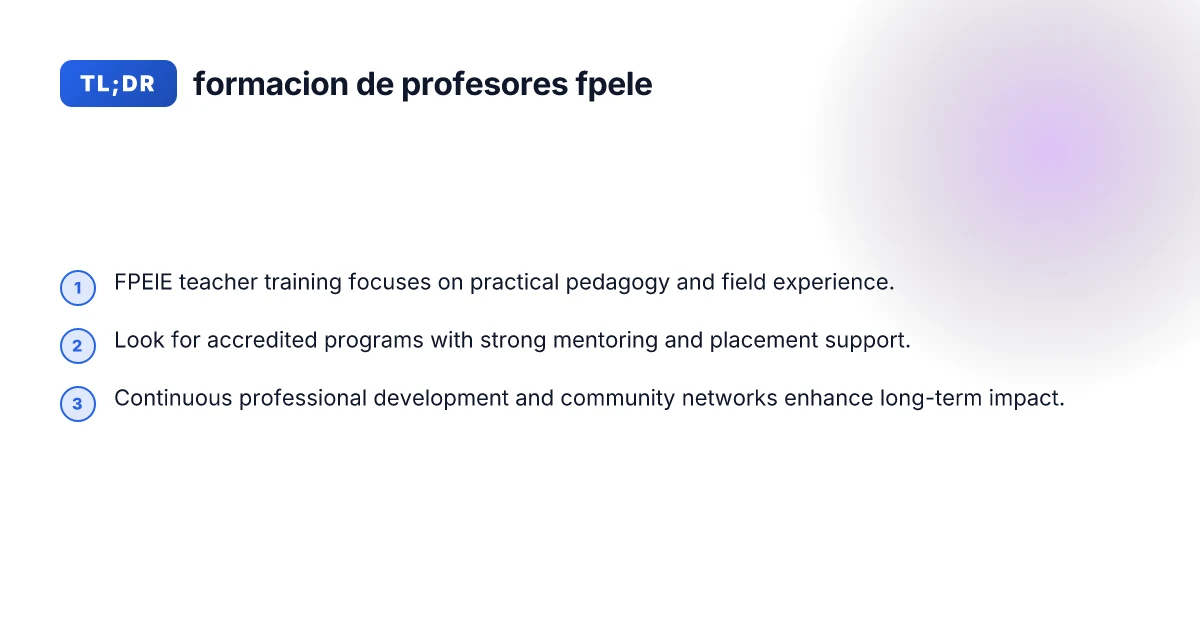
- Mentored micro-teaching: Structured sessions where preservice teachers practice, receive feedback, and iterate.
- Industry-informed curricula: Courses co-designed with employers to ensure relevance.
- Reflective portfolios: Documentation of growth across pedagogy, assessment, and classroom management.
- Inclusive pedagogy: Training on accessibility, culturally responsive teaching, and differentiated instruction.
- Safety and compliance training: Practical knowledge that ensures safe teaching environments, especially in labs and workshops.
- Continuous professional development: Alumni access to workshops, conferences, and advanced credentials.
Student outcomes and impact
Strong FPElE teacher training leads to: Curso empresarial: how to choose and get the most from a business course
- Better student engagement and achievement in technical subjects
- Higher retention in vocational tracks due to confident teaching and meaningful projects
- Improved alignment between classroom learning and job-ready skills
- More robust teacher leadership in schools and training centers
- A pipeline of qualified educators who can mentor the next generation of workers
Practical tips for prospective participants
- Start with a clear picture of your goals: Do you want a full credential, or are you exploring a specialty?
- Talk to current teachers: Ask about practicum quality, mentor support, and job placement outcomes.
- Visit partner labs and workshops: See firsthand how theory translates into practice.
- Check funding options: Scholarships, employer sponsorships, or government grants can ease costs.
- Plan for lifelong learning: Build a plan to continue professional development after graduation.
The recommendation: which path should you pursue?
If you want a comprehensive, widely recognized credential with strong career support, a university degree plus teaching credential or an accredited postgraduate teacher training program is a solid choice. If you’re already working in a technical field and seeking quicker entry into the classroom, a certified vocational pedagogy program or an apprenticeship-integrated track can be highly effective, especially when it includes a robust practicum and industry ties. In all cases, prioritize programs with active industry partnerships, substantial hands-on teaching experience, and clear pathways to ongoing professional development.
Final note: formacion de profesores fpele is about more than delivering content. It’s about shaping teachers who can translate technical knowledge into practical skills, motivate diverse learners, and prepare students for meaningful work. When choosing a program, think long-term about how it will support your teaching practice, your students’ success, and your career growth as an educator in FPElE. If you’d like, I can help compare specific programs or find options based on your country and field of interest.