Ecotourism excursions san cristobal chiapas

A practical guide to eco-friendly excursions around San Cristóbal de las Casas, Chiapas, highlighting communities, wildlife, and responsible travel.
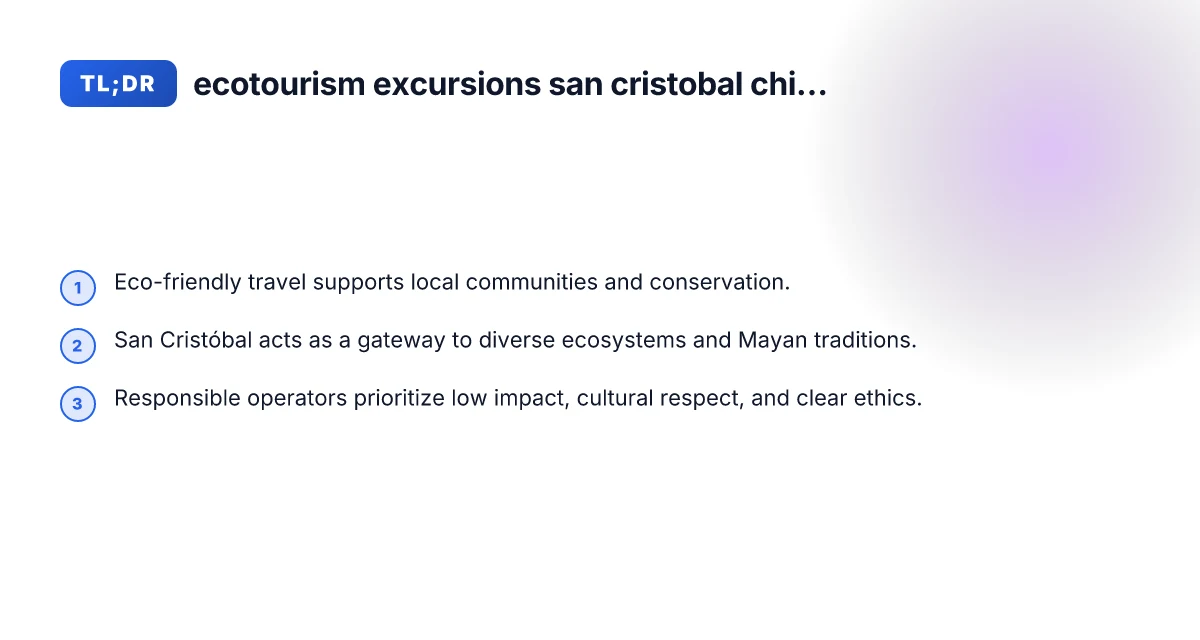
San Cristóbal de las Casas in Chiapas is a gateway to some of Mexico’s most vibrant ecosystems and culturally rich communities. For eco-conscious travelers, the region offers excursions designed to minimize environmental impact while supporting indigenous and local initiatives. This guide breaks down practical options, what to expect, and how to choose ecotours that align with responsible travel.
Comparison of ecotourism themes in San Cristóbal Chiapas
| Theme | Description | Typical Activities | Environmental Focus | Suitable for | Notes |
|---|---|---|---|---|---|
| Cloud forests | High-altitude, misty forests around San Cristóbal | Birding, hiking, canopy views | Habitat preservation, sustainable trails | Nature lovers, hikers | May require guides |
| Indigenous culture | Community-led experiences | Weaving, markets, storytelling | Respectful engagement, local livelihoods | Culture enthusiasts | Verify community benefits |
| Water-based ecotours | Rivers, lagoons, waterfalls | Canoeing, kayaking, swimming | Waste-free boating, safety | Families, adventure seekers | Check safety gear |
Compiled November 2026; check the provider's site for current details.
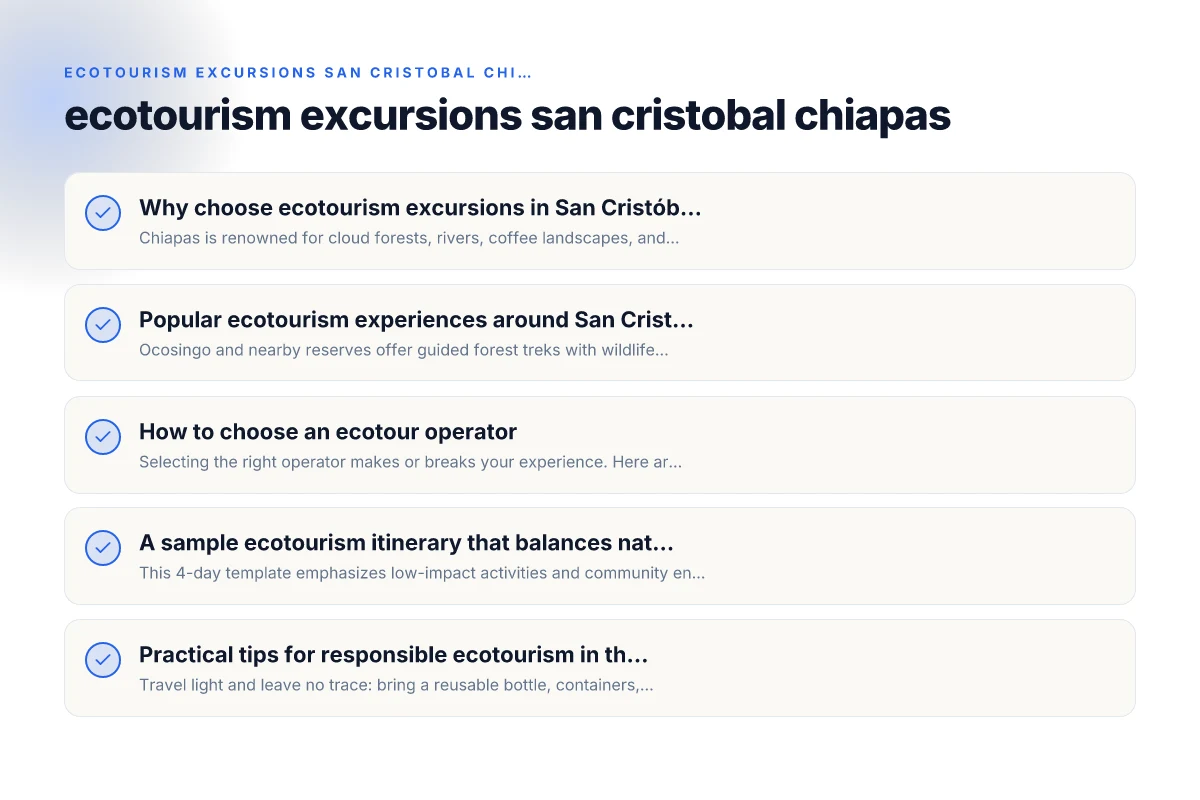
Why choose ecotourism excursions in San Cristóbal Chiapas
Chiapas is renowned for cloud forests, rivers, coffee landscapes, and Maya heritage. Ecotourism excursions in and around San Cristóbal focus on sustainable visits that:
- Protect biodiversity and fragile habitats
- Support community-led initiatives
- Minimize carbon footprints and waste
- Respect local cultures, languages, and traditions
When you choose well-vetted operators, you can experience stunning scenery, like coffee farms, tsotsil markets, and pristine reserves, without compromising the long-term health of the places you visit.
Popular ecotourism experiences around San Cristóbal
Community-led rainforest and cloud forest hikes
- Ocosingo and nearby reserves offer guided forest treks with wildlife spotting
- Guides explain ecological relationships, medicinal plants, and conservation challenges
- Small groups reduce impact and increase safety
Indigenous community visits
- Learn about Tseltal and Tsotsil traditions, weaving, and agriculture
- Participate in workshops that emphasize sustainable practices
- Support crafts co-ops and women-led initiatives
Wildlife and birding safaris
- The region hosts diverse birds, including toucans, pigeons, and migratory species
- Eco-focused operators provide birding-only itineraries to minimize disturbance
- Sensitive habitats are protected through strict guidelines on pacing and noise
Coffee farm tours with conservation themes
- Visit shade-grown farms that protect soil, water quality, and biodiversity
- Learn about fair-trade practices, processing methods, and biodiversity benefits
- Include tastings tied to ecological stewardship
Water-based ecotours
- Rivers and lakes offer gentle kayaking, canoeing, and paddleboarding
- Operators emphasize watershed protection, litter-free shorelines, and safety
- Educational moments cover aquatic life and water quality
Options to compare ecotour operators
| Operator | Certification | Guide ratio | Small groups | Local community benefit | Booking flexibility | Price range |
|---|---|---|---|---|---|---|
| Operator A | Green Seal / local accreditation | 1:6 | Yes | Yes (reinvests profits) | Moderate | $$ |
| Operator B | None declared | 1:8 | No | Some | Flexible | $$ |
| Operator C | Eco-tourism label | 1:4 | Yes | Strong | Limited | $$$ |
Compiled November 2026; check the provider's site for current details. Day of the dead spanish immersion program Mexico
How to choose an ecotour operator
Selecting the right operator makes or breaks your experience. Here are practical tips:
- Look for certifications or affiliations with sustainable tourism bodies
- Check small-group policies (ideally 6–8 participants or fewer)
- Ensure clear communications about wildlife viewing etiquette, waste management, and local partnerships
- Read reviews that mention cultural sensitivity and community benefit
- Ask about conservation contributions or visitor fees that directly support habitats
Questions to ask before booking
- How does the operator minimize environmental impact on trails and wildlife?
- Are local guides from the communities you’ll visit?
- Do you participate in any conservation or reforestation projects?
- How is waste managed during the excursion?
A sample ecotourism itinerary that balances nature and culture
This 4-day template emphasizes low-impact activities and community engagement. Adjust for season, fitness level, and travel style.
- Day 1: San Cristóbal town orientation and cultural exchange
- Market tour with a local guide
- Evening visit to a community-supported restaurant
- Day 2: Cloud forest hike and wildlife observation
- Morning guided trek in a protected reserve
- Afternoon conservation talk and plant-use demonstration
- Day 3: Coffee agroforestry and valley viewpoints
- Visit a shade-grown farm
- Learn about biodiversity nets and soil preservation
- Day 4: Indigenous weaving workshop and village visit
- Hands-on weaving or dyeing demonstration
- Support for a women’s cooperatives market stall
- Optional add-ons: eco-lodging night, stargazing in rural dark skies
Sample ecotour itinerary balance sheet
| Day | Focus (Nature / Culture) | Key activity | Time outdoors | Cultural element | Local interaction |
|---|---|---|---|---|---|
| Day 1 | Nature | Cloud forest hike | 3–4 hours | Museum visit | Market stroll (brief) |
| Day 2 | Culture | Indigenous weaving workshop | 2–3 hours | Village story circle | Lunch with family |
| Day 3 | Nature + Culture | Caves & coffee farm tour | 4–5 hours | Coffee cooperative tour | Handicraft demo |
Compiled November 2026; check the provider's site for current details. Contact details San Cristobal Chiapas: how to reach and connect
Practical tips for responsible ecotourism in the Chiapas region
- Travel light and leave no trace: bring a reusable bottle, containers, and bags
- Respect wildlife distances and quiet observation. Avoid feeding animals
- Support community enterprises by purchasing goods directly from cooperatives
- Choose accommodations that implement solar power, water recycling, and composting
- Pack appropriate clothing for altitude changes and tropical humidity
- Carry small change for donations or tips that directly benefit locals or conservation projects
A quick comparison: guided ecotourism options near San Cristóbal
| Focus area | Typical activities | Environmental emphasis | Community impact |
|---|---|---|---|
| Cloud forest treks | Guided hikes, wildlife spotting, plant use | Trail conservation, waste control | Guides from local communities, revenue to cooperatives |
| Indigenous village visits | Culture, weaving, agriculture demonstrations | Cultural sensitivity, ethical visits | Direct support to artisans and teachers |
| Coffee farm tours | Shade-grown farming, processing, biodiversity talks | Agroforestry practices, water use | Coffee co-ops often reinvest in community programs |
| Birding and wildlife safaris | Slow-paced wildlife watching, birds, amphibians | Minimal disturbance, location-sensitive | Local guides, educational outreach |
Where to stay and how to stay green
- Look for eco-lodges and hostels that practice energy efficiency, water conservation, and waste reduction
- Choose accommodations that source locally and employ regional staff
- Consider staying in villages or small towns a short distance from the UNESCO Biosphere Reserve areas to minimize travel
If sustainability matters in your trip planning, verify a place’s green certifications, or ask direct questions about energy sources, recycling programs, and local hiring.
Short section: planning considerations and safety
- Altitude and weather: San Cristóbal sits at a higher elevation. Pack accordingly
- Health: bring a basic first aid kit and check needed vaccines or recommendations for Chiapas
- Language: many communities speak indigenous languages. Learning a few phrases in Spanish or Tseltal/Tsotsil can enhance interactions
- Safety: travel with well-reviewed operators, especially in remote areas
Final recommendation
For travelers drawn to ecotourism excursions san cristobal chiapas, the best approach is to blend cultural immersion with conservation-minded adventures. Favor operators that demonstrate transparent ethical practices, direct community benefit, and a clear plan to minimize environmental impact. Choose experiences that raise awareness about conservation challenges, support fair wage practices for local guides, and prioritize wildlife and habitat protection. By doing so, you’ll enjoy meaningful, responsible travel that preserves Chiapas’s remarkable landscapes and rich cultures for future visitors.