Activities Workshops San Cristobal Chiapas
Discover engaging activities and workshops in San Cristobal de las Casas, Chiapas, from weaving to cooking to nature exploration.
San Cristobal de las Casas in Chiapas is a gem for travelers who love hands-on experiences. The city sits high in the Sierra Madre and is known for its rich indigenous heritage, vibrant markets, and cool, coffee-scented air. If you’re after activities and workshops, you’ll find options that teach you traditional crafts, cooking, dance, language, and nature skills. Below is a guide to the best experiences, how they work, and what to expect.
Quick comparison of workshop categories
| Category | Typical duration | Hands-on focus | Language of instruction | Price range | Availability |
|---|---|---|---|---|---|
| Traditional crafts | half-day to 2 days | High | English / Spanish | $$ | Year-round |
| Food & market classes | 2–4 hours | Medium to high | English / Spanish | $$ | Seasonal |
| Language & culture | 1–2 weeks | Immersive | English / Spanish | $$$ | Ongoing |
| Nature & eco experiences | half-day to full day | Medium | English / Spanish | $–$$ | Seasonal |
Compiled November 2026; check the provider's site for current details.
Traditional crafts workshops
Weaving and textile arts
- Learn backstrap loom weaving from local artisans.
- Small, beginner-friendly classes that cover basic weaving patterns, dyeing, and finishing.
- You’ll leave with a simple woven piece and a stronger appreciation for Chiapas textiles.
Pottery and ceramics
- Hands-on sessions at community studios or cooperatives.
- Techniques often include hand-building, coiling, and glaze basics.
- Suitable for first-timers and hobbyists wanting to try a tactile craft.
Basketry and palm weaving
- Quick projects using natural fibers sourced nearby.
- Great for travelers who want something lightweight to take home.
Workshop tips:
- Check if the workshop includes materials or if there is a materials fee.
- Ask about the language of instruction. Many sessions are in Spanish with some bilingual guides.
- Bring a small bag to carry your finished piece.
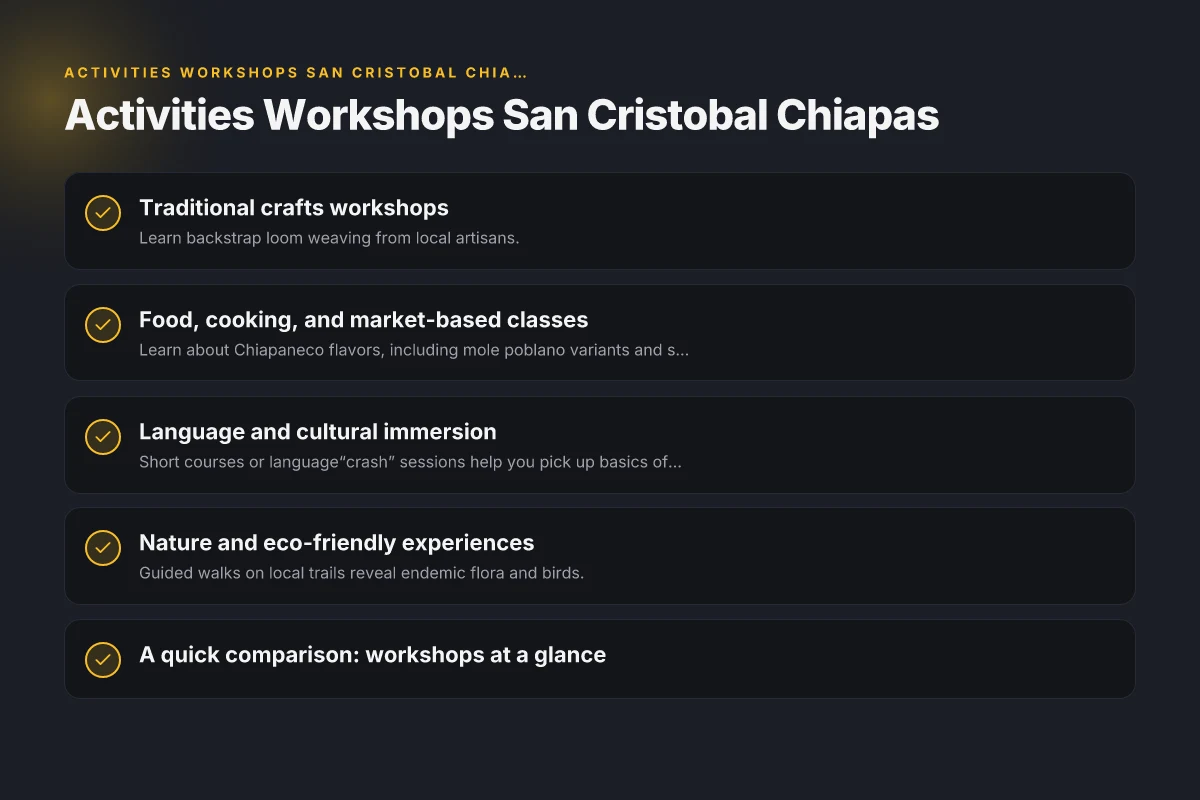
Food, cooking, and market-based classes
Mole, salsas, and regional specialties
- Learn about Chiapaneco flavors, including mole poblano variants and salsas.
- Classes often end with a shared meal or tasting of your creations.
Coffee and chocolate experiences
- The region is famous for coffee and cacao. Some workshops combine tours with hands-on roasting or grinding.
- Learn about farming practices, taste profiles, and traditional preparation methods.
Traditional meal preparation at a casa particular
- Home-based cooking classes can offer a more intimate view of family recipes.
- Expect to learn about corn masa, moles, tortillas, and regional sides.
Cooking workshop tips:
- Ask about ingredients and potential dietary restrictions.
- Some classes pair with a market tour to discover fresh produce.
- Reserve early during high season (October–April) when interest is strongest.
A quick glance at key factors by workshop type
| Factor | Traditional crafts | Food & cooking | Language & culture | Nature & eco | All-inclusive option |
|---|---|---|---|---|---|
| Hands-on level | High | High | Medium | Medium | Yes / sometimes |
| Local host involvement | Yes | Yes | Yes | Yes | Yes |
| Family-friendly | Yes | Yes | Yes | Yes | Yes |
| Accessibility (ease of join) | Moderate | Easy | Moderate | Easy | Yes / varies |
| Typical venue | Workshop studio | Market/kitchen | Cultural center | Eco site | Noted option |
Compiled November 2026; check the provider's site for current details. Accommodation in san cristobal de las casas apartment homestay
Language and cultural immersion
Zapotec and Mayan language snippets
- Short courses or language“crash” sessions help you pick up basics of local languages.
- Often paired with cultural introductions or storytelling sessions.
Community dance and music
- Learn regional rhythms, such as traditional dances performed for festivals.
- Classes may include a brief history of the music and costumes.
Cultural immersion notes:
- Lyrics and pronunciation can be challenging. Instructors appreciate practice and respect.
- Dancing is typically done in comfortable clothing. Bring water and a towel if needed.
Nature and eco-friendly experiences
Nature walks and cloud forest treks
- Guided walks on local trails reveal endemic flora and birds.
- Some operators combine hikes with community visits or conservation talks.
Indigenous community tours
- Visits focus on sustainable living, traditional farming, and handicraft demonstrations.
- This format supports local families and cooperatives.
Sustainable farming and orchard experiences
- Learn about organic farming, seed-saving, and permaculture practices.
- Often include tastings of freshly harvested fruit or tea.
Nature and eco tips:
- Bring sunscreen, insect repellent, and sturdy walking shoes.
- Respect private property boundaries and follow your guide’s safety instructions.
- Choose operators with clear ethical guidelines and community benefits.
A quick comparison: workshops at a glance
| Type of workshop | What you learn | Typical duration | Language | Price range (USD) | Where to book |
|---|---|---|---|---|---|
| Weaving and textiles | Backstrap loom, dyeing, patterns | 2–4 hours | Spanish; some bilingual | 15–50 | Local studios, hostels, market stalls |
| Cooking and market tours | Mole, salsas, tortillas | 3–5 hours | Spanish; often bilingual | 25–70 | Cooking schools, hotels, tour operators |
| Pottery and ceramics | Hand-building, glazing | 2–3 hours | Spanish; some English | 20–60 | Community centers, ateliers |
| Coffee/chocolate experiences | Roasting, tasting, processing | 2–4 hours | Spanish; some English | 20–50 | Cafés, cooperatives, tours |
| Dance and music | Regional dances, rhythms | 1–2 hours | Spanish; often with English | 10–40 | Cultural centers, studios |
Planning considerations and tips
| Tip / Consideration | Traditional crafts | Food & cooking | Language & culture | Nature & eco | Practical planning |
|---|---|---|---|---|---|
| Best season to join | Dry season | Cool months | Any time | Dry season | Check calendar |
| Booking certainty | Moderate | High | Moderate | Moderate | Plan 2–4 weeks ahead |
| What to bring | Comfortable clothing | Apron / utensils | Notebooks | Hat / sunscreen | Arrive early |
| Suitable for groups | Yes | Yes | Yes | Yes | Most workshops |
| Cancellation policy | Flexible / varies | Moderate | Strict / varies | Flexible | Verify policy |
Compiled November 2026; check the provider's site for current details. Voluntariado internacional san cristobal chiapas Mexico
Practical planning and tips
- Where to find workshops: Start with the main festival hubs and cultural centers in San Cristobal, such as the central market area, cultural centers, hostels that offer activities, and cooperatives around the city. Many workshops are run by women’s cooperatives or family groups, giving you an authentic glimpse into daily life.
- Best time to participate: The dry season (November through April) often has more outdoor and nature-based classes. If you want to pair crafts with a festival, align your trip with regional celebrations or market days.
- How to book: You can book directly through local studios, at your hotel reception, or via reputable tour operators that offer a curated slate of workshops. If you’re traveling with a group, ask for a private session. Many hosts happily tailor classes to larger parties.
- What to bring: Comfortable clothing, water, a small tote for carrying your crafts home, and a curiosity-driven attitude. Some workshops require you to wear aprons or bring a notebook for technique notes.
- Language consideration: While many providers offer bilingual instruction, a few sessions may be in Spanish only. If you’re not fluent, consider a guided workshop that promises English instruction or pair a craft activity with a bilingual guide.
How to build a balanced itinerary
- Mix crafts with food: Start with a textile workshop in the morning, then join a cooking class that features regional specialties for lunch. End with a coffee or cacao experience.
- Alternate indoors and outdoors: Combine a pottery or weaving session with a nature walk or a forest trek to round out your day.
- Leave room for spontaneous discoveries: San Cristobal’s markets and plazas often host pop-up workshops, impromptu music, or street performances that can become memorable, unscripted experiences.
Final recommendations
If you’re visiting San Cristobal Chiapas and want a well-rounded set of activities, aim for 2–3 workshops plus a nature or market experience. For a family-friendly itinerary, choose shorter sessions (1–2 hours) that offer hands-on learning and tangible takeaways, such as weaving, simple cooking, or pottery. For a cultural immersion thread, pair a language or dance workshop with a community tour to deepen your understanding of the region’s social fabric.
For the best value, book ahead during peak travel months and confirm inclusions (materials, meals, or take-home items). Look for operators with clear ethical commitments and a transparent price structure. If you’re unsure where to start, your hotel or a reputable tour operator in San Cristobal can customize a day that weaves together crafts, flavors, and nature into a cohesive, memorable experience.